
To get to Serengeti National Park, travelers typically fly into Kilimanjaro International Airport (JRO) or Arusha Airport (ARK) in Tanzania. From there, you can...
The best time to visit Serengeti National Park is during the dry season from June to October, ideal for witnessing the Great Migration and abundant wildlife gathering around water sources. For Tanzania safaris, this period offers excellent game viewing and clearer weather conditions. Alternatively, the wet season from November to May is perfect for seeing lush landscapes, fewer crowds, and the calving season (January to February), which attracts predators and provides dramatic wildlife encounters.
What is the best time of year to visit the Serengeti National Park?
The best time to visit the Serengeti National Park depends on what you want to experience, but generally, the dry season is the most popular. This runs from late June to October. During this time, the Serengeti’s weather is perfect for a wildlife safari – it’s dry, sunny, and not too hot. Most importantly, the dry season makes it easier to see wildlife. Since water sources become scarce, animals like zebras, elephants, giraffes, and lions gather around rivers and watering holes. This concentrated activity makes wildlife viewing very rewarding.
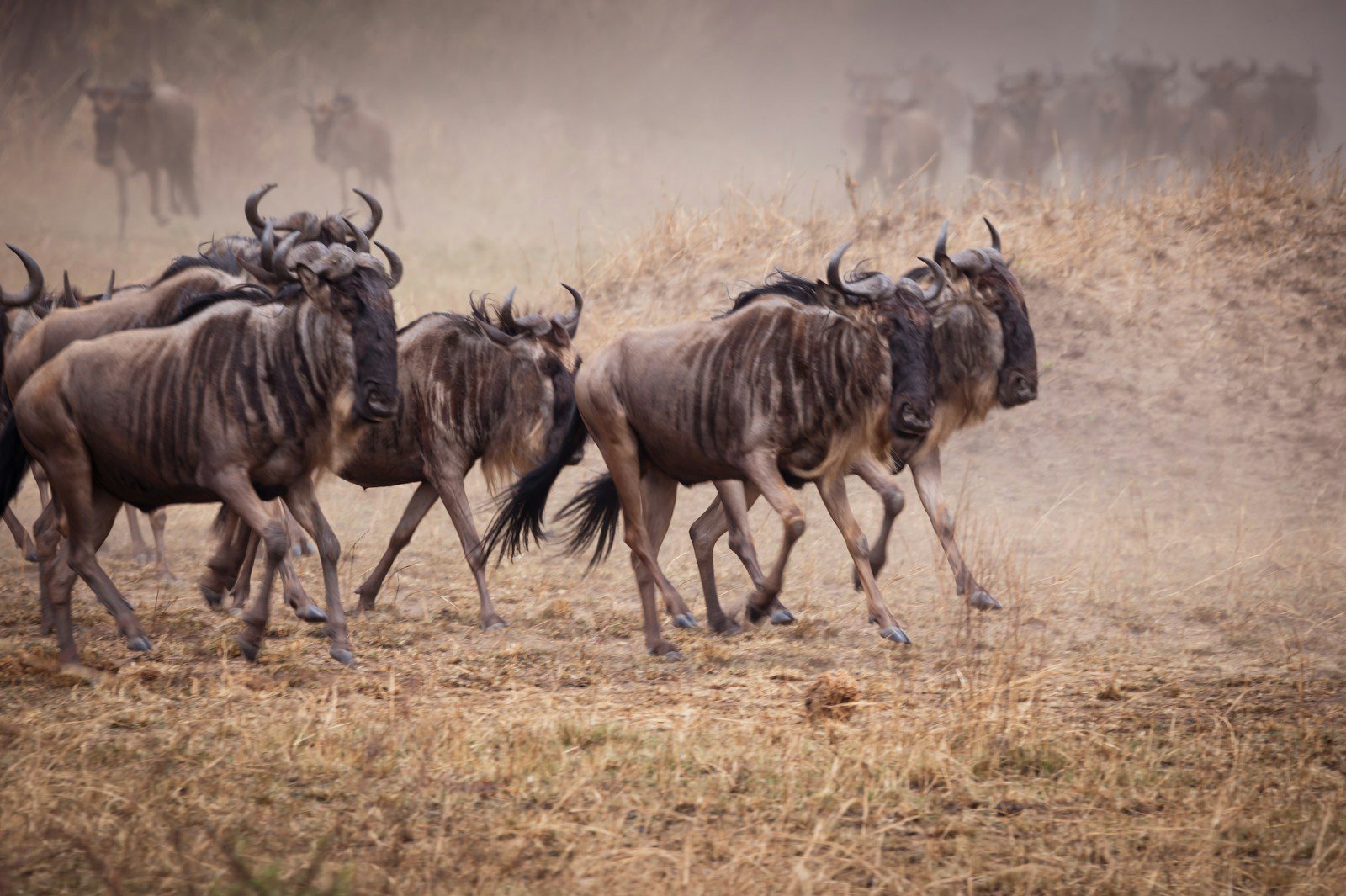
If you’re particularly interested in the great wildebeest migration, which involves millions of wildebeest, zebras, and gazelles moving across the Serengeti in search of greener pastures, late June to early August is the best time. This is when you can witness dramatic river crossings, where herds risk their lives crossing crocodile-filled rivers like the Mara River.
If you prefer fewer tourists or are okay with taking some chances, the rainy season (March to May) offers lush, green landscapes and is a birder’s paradise, as migratory birds fill the skies. However, rains can make travel tricky, as roads sometimes become muddy and difficult to navigate.
In summary, the best time overall is the dry season (June to October), especially if you want reliable wildlife sightings and sunny weather. For a different, quieter Serengeti safari experience, the off-peak rainy season can also hold unique beauty.
What are the different seasons in the Serengeti, and how do they affect wildlife viewing?
The Serengeti has two main seasons: the dry season (June to October) and the rainy season, which is split into two parts – the short rains (November to December) and the long rains (March to May). These seasons greatly affect how you can experience the park and the wildlife you’ll see.
During the dry season, the Serengeti becomes dusty and dry, and water is scarce. Because animals tend to rely on specific rivers, lakes, and water holes, they gather in large concentrations, making it easier for visitors to see many species in one area. Predators like lions, cheetahs, and leopards are especially visible, as their prey congregates out in the open. The lack of vegetation also means there are fewer places for animals to hide, so spotting them becomes simpler. However, it can get crowded with tourists during this peak season.
During the rainy seasons (November-December and March-May), the landscape transforms into a lush, green wonderland. Though there is more vegetation, which can make it harder to spot wildlife, the rains bring life to the Serengeti. Calving season happens during this time (January-March), when thousands of animals like wildebeest and zebras give birth. This is also when predators like lions and hyenas are especially active, hunting these newborns. The short rainy season (November-December) offers a nice balance between greenery and manageable weather, while the long rains (March-May) bring heavy downpours, fewer tourists, and a unique charm for those willing to navigate the challenges of wet roads.
In summary, the dry season is best for easy wildlife viewing, while the rainy season offers an immersive, lush experience, with new wildlife activity and fewer crowds.
When is the Great Migration most active in the Serengeti?
The Great Migration is one of the most spectacular wildlife events on Earth, involving over a million wildebeest, zebras, and gazelles traveling in a circular route through the Serengeti and neighboring Masai Mara in Kenya. This migration is active throughout the year, but the specific timing of key events depends on where the migratory herds are in the Serengeti.
From January to March, the herds are found in the southern Serengeti, near the Ndutu region, as they enjoy the lush grass from the rains. This period coincides with the birthing season, where thousands of wildebeest give birth over just a few weeks. With so many vulnerable newborns, predators like lions and cheetahs are very active, making this time an exceptional safari experience for wildlife enthusiasts.
From April to June, the herds start moving north to the central and western Serengeti as they search for fresh pastures. This marks the beginning of their long journey, during which they form immense groups and face predators along the way. By late June or early July, things become dramatic as the herds near the Mara River at the northern Serengeti. This iconic river crossing season sees wildebeest and zebras risking their lives to cross crocodile-infested waters, creating a thrilling spectacle that usually lasts through August.
In September and October, the herds graze in the northern Serengeti and cross into Kenya’s Masai Mara. By November, they begin their return journey south and reach the southern Serengeti again between December and January to complete their annual cycle.
So, the Great Migration is “most active” depending on what you want to see: calving (January-March), river crossings (July-August), or large moving herds (April-November). Most visitors aim for the dramatic Mara River crossings in July to August, making it a peak time for a Serengeti safari experience.
What are the peak and off-peak tourist seasons in the Serengeti?
The Serengeti, one of Africa’s most famous wildlife destinations, has distinct peak and off-peak tourist seasons that influence travel experiences significantly.
The peak tourist season in the Serengeti is during the dry season, which runs from June to October. This period is especially popular because wildlife viewing is exceptional. During the dry months, animals tend to gather around water sources since water is scarce elsewhere. This makes it much easier for visitors to spot animals like elephants, lions, giraffes, and antelope in large numbers. The dry grass also makes it easier to see these animals in open landscapes. Additionally, a key highlight during this time is the Great Migration, as thousands of wildebeests and zebras cross the crocodile-filled Mara River in July and August in their journey toward the Masai Mara in Kenya.
The off-peak season typically falls during the rainy months of March to May and November. Fewer tourists visit during this time, which means accommodations are more affordable, and the park itself feels quieter, providing a more tranquil safari experience. However, heavy rains in March, April, and May can make some roads muddy and challenging to navigate, and wildlife can disperse due to the plentiful water sources. That said, the rainy season brings lush green landscapes and dramatic skies, making the scenery stunning for photography. Also, this is the time when many animals give birth, such as antelopes and wildebeests, and you may witness adorable interactions between mothers and their young.
In short, peak seasons are fantastic for spotting gathered wildlife and experiencing the Migration but come with higher costs and more crowds. Off-peak seasons are great if you’re looking for fewer tourists, lower prices, and vibrant landscapes, though rain may affect travel.
Which months are best for game drives and safaris in the Serengeti?
The best months for game drives and safaris in the Serengeti are during the dry season, from June to October, because conditions for wildlife viewing are ideal during this time. Let’s break this down.
In these months, animals tend to gather around rivers, waterholes, and other remaining water sources since the lack of rain means water is limited. This makes it much easier to find and watch a variety of animals during game drives. For example, you might see herds of elephants coming to drink, lions resting in the shade, or giraffes grazing in open areas. Additionally, the reduced vegetation during the dry season makes it easier to see farther into the landscape and spot wildlife that would otherwise be hidden behind tall grass or thick bushes.
The period between July and September is particularly noteworthy if you’re interested in seeing the Great Migration and the dramatic Mara River crossings. Thousands of wildebeests and zebras migrate north, providing an unforgettable spectacle that involves dangerous encounters with predators, including crocodiles waiting in the river and big cats hunting the herds.
Alternatively, if you don’t mind some rain, January to February is also a great time for safaris. This short dry window between the rainy seasons marks the calving season for wildebeests in the southern parts of the Serengeti. The large number of young animals also attracts predators, offering exciting opportunities to observe the dynamics between prey and hunters.
While the rainy months (March to May and November) can be challenging because of slippery roads and dispersed animals, they are still good if you’re looking for greenery, birdlife, and a quieter park.
To sum up, the dry months of June to October are the best overall for safaris, while January and February also offer unique wildlife experiences if you prefer a slightly different vibe.
How does the weather in the Serengeti change throughout the year?
The Serengeti’s weather changes throughout the year and is largely influenced by its two main seasons: the dry season and the rainy season. These weather patterns play a big role in how animals behave and where they are located, particularly during the great wildebeest migration. This iconic event draws many visitors eager to witness the movement of vast herds across the rich grasslands.
The dry season runs from June to October, characterized by sunny days, cooler mornings and evenings, and limited rainfall. Daytime temperatures usually range from 25°C to 29°C (77°F to 84°F), while nighttime can be as cool as 13°C (55°F). The dry weather keeps the grass low, and rivers and waterholes start drying up, which makes this season great for game viewing. Wildlife is more active during the cooler mornings and evenings, aligning perfectly with safari schedules, especially for those seeking a memorable Serengeti safari experience.
The wet season has two main periods: the short rains in November to December and the long rains from March to May. The short rains bring brief but heavy downpours, followed by sunshine, which makes the landscape lush and green. The long rains (March to May), however, are marked by prolonged heavy rain, resulting in muddy roads and some areas becoming difficult to access. Despite this, the wet season is when the Serengeti’s ecosystem comes alive. Plants flourish, animals spread out, and the calving season (January–February) ensures plenty of young animals on the plains, enhancing the overall wildlife safari experience.
In summary, June to October is dry, making it the best time for safaris and wildlife spotting, while the rainy months of November to May bring lush views, unique wildlife behaviors, and fewer crowds despite the challenges posed by wet weather.
When is the Serengeti less crowded with tourists?
The Serengeti is less crowded with tourists during its off-peak seasons, which generally align with the rainy periods. Specifically, this includes the months of March to May (the long rainy season) and November to mid-December (the shorter rainy season). During these times, fewer visitors come because of the increased likelihood of rainfall, making these quieter months ideal for those wanting a serengeti safari experience that is more peaceful and less bustling.
For comparison, the peak tourist seasons are from June to October, during the dry season, and in January to February, when the great wildebeest migration’s calving season takes place. These periods tend to be more crowded because they offer optimal wildlife viewing and more predictable weather for safaris.
Visiting during the low-crowd seasons has some clear benefits. For one, you’ll get a more intimate, exclusive experience. Lodges and camps tend to have more availability, often at reduced prices. The Serengeti feels more untouched and serene, allowing for better enjoyment of the landscapes and wildlife without sharing the experience with large groups.
However, there is one significant tradeoff: the rains may make some areas of the park harder to access, particularly unpaved roads that could become muddy. This can restrict certain game drives, but experienced guides and operators adapt to the conditions. Plus, the rains transform the Serengeti into lush, green grasslands that are stunning for photography.
As an example, if you visit in April, you might spot predators like lions and cheetahs hunting prey without competing with a dozen safari vehicles. The weather may be unpredictable, but the payoff is enjoying these awe-inspiring moments in near solitude, especially during the wildebeest migration season.
What are the advantages and disadvantages of visiting during the rainy season?
The rainy season in the Serengeti spans from March to May (long rains) and November to mid-December (short rains), making it an attractive time for a wildlife safari.
Advantages:
- Fewer Tourists: The park is far less crowded, allowing you to enjoy a more tranquil and intimate safari experience. You won’t struggle for a prime view of the animals or have to deal with long queues at popular lodges.
- Lush Green Landscapes: The rains bring the Serengeti to life, transforming it from dry yellows to lush greens. This scenery is fantastic for photos and offers a completely different perspective compared to the dry season.
- Young Animals: During the rainy season, antelope species like gazelles and impalas tend to give birth. You might see young animals and their mothers, which naturally draws predators like big cats. It can be an exciting time to witness the circle of life.
- Cheaper Rates: Safari operators and lodges often offer significant discounts during the off-peak season. This makes it more affordable to enjoy luxury accommodations or longer stays.
Disadvantages:
- Unpredictable Weather: It’s called the rainy season for a reason. While the rains rarely last all day, heavy downpours can occasionally interrupt game drives or make certain parts of the park inaccessible.
- Muddy Roads: The rains can make dirt roads treacherous for vehicles, with some routes being cut off entirely. This may limit which areas of the Serengeti you can explore.
- Wildlife Dispersion: Unlike the dry season, when animals congregate around shrinking water sources, the rainy season provides widespread water access. As a result, animals can be more dispersed, making game viewing slightly more challenging.
As an example, imagine staying at a camp in April during the long rains. You may wake up to the sound of thunder rolling through the serengeti plain, but quickly find yourself on a game drive where you spot a lion hunting amidst the fresh greenery. While some roads might be tricky to navigate, the atmosphere will feel calmer, and this serengeti safari experience is unlike any you’d see in the drier months.
Are certain times of the year better for spotting specific animals in the Serengeti?
Yes, the best time to see specific animals during a Serengeti safari depends on their behaviors, habitats, and migratory patterns, particularly during the great wildebeest migration, which varies throughout the year.
1. The Great Migration:
The Serengeti is world-famous for the great wildebeest migration, where millions of wildebeest and other herbivores follow seasonal rain patterns in search of rich grasslands.
- Calving Season: From January to February, in the southern Serengeti (around Ndutu and the Ngorongoro Conservation Area), you’ll see thousands of wildebeest calves being born. Predators like lions and cheetahs are highly active during this time, hunting the vulnerable young animals.
- River Crossings: The dramatic Mara River crossings occur between July and September, as wildebeest move into the northern Serengeti and cross into Kenya’s Maasai Mara. This is one of nature’s most jaw-dropping spectacles, with crocodiles lying in wait.
2. Big Cats (Lions, Leopards, and Cheetahs):
Big cats can be seen year-round in the Serengeti, especially during the great wildebeest migration, which attracts many visitors.
- During the great calving season (January-February), predators take advantage of the abundance of young prey.
- In the dry season (June-October), they congregate around watering holes and are easier to spot since vegetation is sparse.
3. Elephants and Giraffes:
Elephants and giraffes don’t migrate like wildebeest, so you’re likely to see them no matter the season. However, during the dry landscape of the Serengeti safari experience (June-October), it’s fantastic for spotting them clustered around scarce water sources.
4. Birds:
If you’re a bird-watching enthusiast, the Serengeti is best visited during the rainy season (November to April). This is when migratory bird species from Europe and Asia fly in, filling the park with vibrant, colorful flocks.
5. Rare Sightings (Like Rhinos):
Black rhinos are rare and best seen in the northern Serengeti or near the Ngorongoro Conservation Area, with no specific “best time” but a more consistent presence year-round.
In summary, timing your visit based on specific animal activity can help maximize your viewing opportunities. For example, a June visit could offer dramatic river crossings, while a February trip might let you witness calving and intense predator-prey action. Every time of year in the Serengeti has something incredible to offer!
How does the timing of sunrise and sunset affect safari activities in the Serengeti?
Safari activities in the Serengeti are largely influenced by the timing of sunrise and sunset because animals are most active during cooler parts of the day – early morning and late afternoon. These periods, often referred to as the “golden hours,” are the best times to spot wildlife, making them prime times for safaris.
For example, a typical day on safari begins just before sunrise. Tourists are often woken up as early as 5:00 AM to prepare for a game drive around 6:00 AM, when the sun is starting to rise. Animals, like predators such as lions and leopards, are still active after hunting overnight. Herbivores, such as zebras or wildebeest, may also be grazing during these hours. The soft morning light makes it easier for photographers to capture stunning images of the landscape and animals against the uniquely beautiful African skies.
Similarly, sunset impacts safari activities because late afternoon and early evening also mark another active period for wildlife. As temperatures cool down, animals become more mobile. For instance, elephants may move to watering holes, and predators like cheetahs may begin scanning for prey. Evening safaris often end just before or at sunset, allowing visitors to enjoy breathtaking views of the sun dipping below the vast Serengeti plains.
Midday, on the other hand, tends to be less eventful for safaris because the heat of the sun causes most animals to rest under shade. Visitors typically use this time to relax at their lodge or camp.
In summary, sunrise and sunset dictate the start and end of the most active wildlife viewing hours, significantly influencing the structure of daily safari activities in the Serengeti.
What is the best time to visit the Serengeti for bird watching?
The best time to visit the Serengeti for bird watching is during the rainy season, which takes place from November to April. During this time, migratory bird species arrive from Europe and Asia, making the Serengeti a hub for birding enthusiasts. Over 500 bird species inhabit the park, and the arrival of these migratory species adds to an already impressive variety, enriching the Serengeti safari experience.
For example, during this season, birdwatchers can spot colorful species like the European roller or the woodland kingfisher, which migrate from distant regions. Other notable birds include storks, herons, and raptors such as migratory eagles and falcons. Additionally, flamingos often gather around the Serengeti’s alkaline lakes, creating a stunning spectacle that complements the great wildebeest migration.
The rainy season is also when many resident birds, like the Fischer’s lovebird and the grey-breasted spurfowl (species unique to the Serengeti region), are in their breeding plumage. This means their feathers are especially vibrant, making them easier to spot and identify. Furthermore, the wetter environment leads to an abundance of insects, which attract insectivorous birds and facilitate plenty of bird activity, enhancing the overall wildlife safari experience.
The downside of visiting during this period is that the rain can make roads muddy and harder to navigate. However, the upside is that there are fewer tourists, making it a quieter and more intimate experience for birdwatchers.
In summary, the rainy season from November to April is the ideal time for bird watching in the Serengeti due to the presence of migratory birds and increased activity from resident species. Bird enthusiasts will benefit from planning their trips during these months to enjoy the park’s incredible avian diversity, especially in the seronera area.
Are there any events or cultural experiences tied to certain times of the year in the Serengeti?
While the Serengeti is most famous for its wildlife, certain times of the year also offer cultural events and activities linked to the local communities and their traditions. The Maasai people, who have lived around the Serengeti region for centuries, are central to many cultural experiences.
One notable event tied to Maasai culture is the “Eunoto Ceremony,” a traditional rite of passage for young Maasai men transitioning to warriors. This event occurs at different times depending on the village but often happens during dry or harvest seasons when community resources are abundant. While the exact timing of Eunoto varies, some tour operators can help arrange visits to Maasai villages to witness parts of their ceremonies, which include singing, dancing, and storytelling.
In addition to the Maasai traditions, visiting the Serengeti during the Great Migration can feel like experiencing an event of nature itself. The movement of millions of wildebeest, zebras, and gazelles is not only an ecological wonder but also has cultural significance, as it is closely tied to the life cycles of animals and the knowledge of the local people who’ve coexisted with this phenomenon for generations. For example, local Maasai herders often align their grazing and water access patterns with the wildlife migration routes.
Lastly, the Swahili people celebrate certain holidays in Tanzanian culture, such as Ramadan and Eid, depending on the lunar calendar. Visiting towns near the Serengeti, like Arusha or Mwanza, during these times offers opportunities to experience festivals, local food, and traditional music.
In summary, events like Maasai ceremonies and regional cultural festivals occur throughout the year, giving visitors the chance to witness the vibrant culture of the Serengeti’s human inhabitants alongside its famous wildlife.
How To Book Your Tanzania Safari
So, when exactly is the best time to visit the Serengeti National Park? We’ve covered the “what” (the incredible wildlife), the “why” (the breathtaking great wildebeest migration), and the “when” (dry season from June to October or calving season in January-February). Now, it’s time to turn your dreams into reality! Contact one of the Best Safari Companies in Tanzania to plan your perfect Serengeti safari experience. Don’t wait, your unforgettable adventure starts with a click!