
To get to Serengeti National Park, travelers typically fly into Kilimanjaro International Airport (JRO) or Arusha Airport (ARK) in Tanzania. From there, you can...
What time of the year is ideal for seeing the migration in different regions?
The Great Migration isn’t a single event, it’s a year-long journey. The ideal time to see it depends on what part of the migration you want to witness and where the animals are at that time. Here’s a breakdown to make it easy:
- December to March: This is calving season in the southern Serengeti, Tanzania. The herds gather in huge numbers on the grassy plains, and over half a million baby wildebeests are born in a few weeks. With so many newborn calves, predators like lions and cheetahs are also very active. If you want to see adorable babies and lots of predator action, this is the time to go!
- April to June: During these months, the herds start moving north in search of fresh grass. You can see long columns of wildebeests and zebras stretching across the plains. By June, the migration reaches the western Serengeti and the Grumeti River, where some animals face their first dangerous river crossings.
- July to October: This is the best time to see the famous river crossings, especially at the Mara River along the Tanzania-Kenya border. The animals leap into the water where crocodiles are waiting. It’s a dramatic part of the migration and a once-in-a-lifetime wildlife experience. During this time, the herds are spread between the northern Serengeti (Tanzania) and the Maasai Mara (Kenya).
- November: As rains return to the southern parts of Tanzania, the herds start moving back to the Serengeti. This is when they complete the loop and prepare for calving season again.
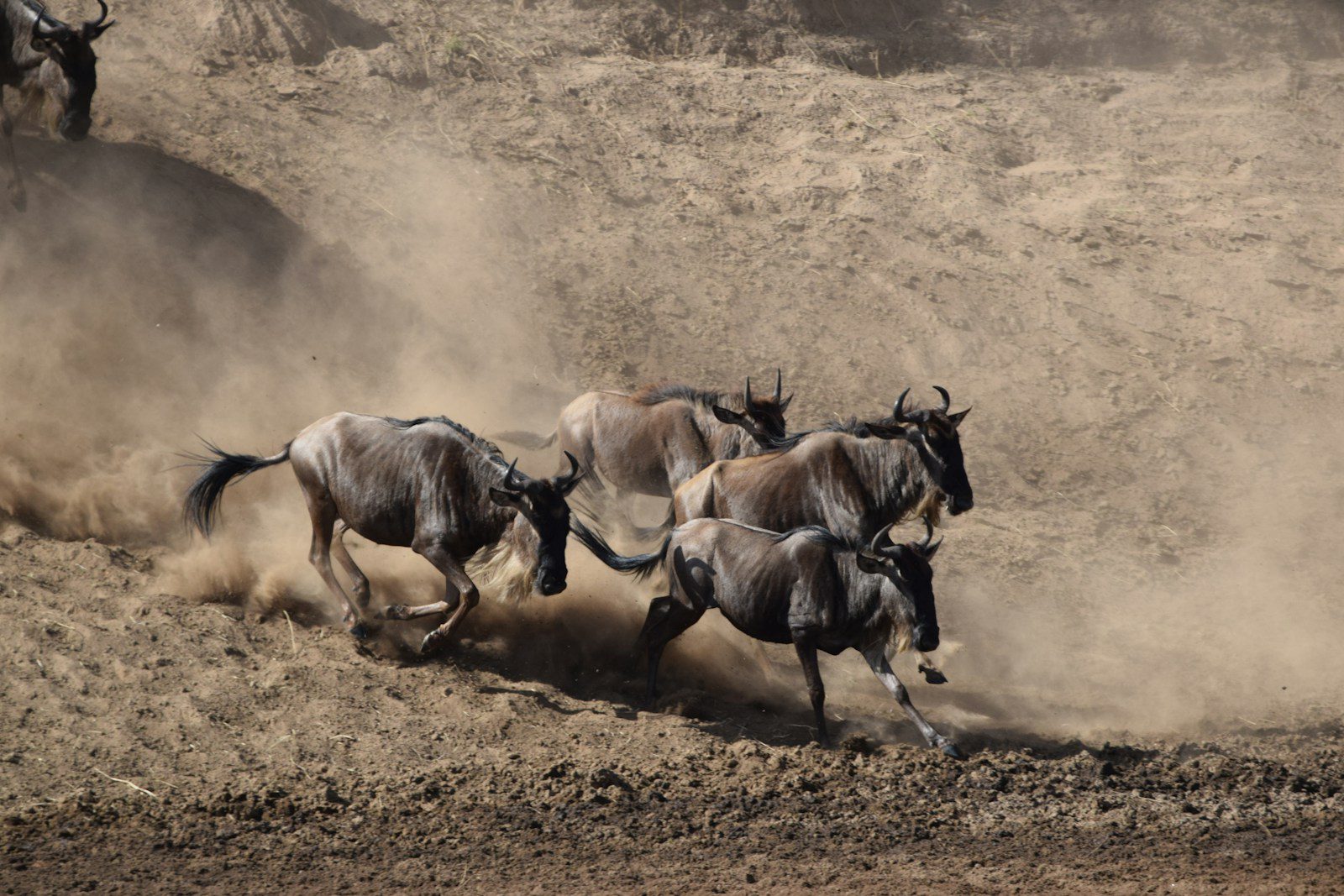
To sum up, go to Tanzania (Serengeti) between December and June to see calving season and early movements. If you’re after the big river crossings, Kenya (Maasai Mara) is your best bet between July and October.
What is the Great Migration, and why is it significant for safari experiences in Africa?
The Great Migration is one of the most amazing natural events on Earth, showcasing an extraordinary wildlife spectacle. It refers to the movement of millions of animals, mostly wildebeests, zebras, and gazelles, across the Serengeti-Mara ecosystem in East Africa. These animals embark on a massive loop each year, crossing between the Serengeti in Tanzania and the Maasai Mara in Kenya. What makes this migration so incredible is the sheer number of animals involved, about 1.5 million wildebeests, 200,000 zebras, and 400,000 gazelles! It’s like a giant animal parade traveling over 1,800 miles (3,000 kilometers) in search of fresh grass and water, making it a prime safari destination for wildlife enthusiasts.
The Great Migration is significant for safari experiences because it’s not just about the animals walking together, it’s about what they encounter along the way. Tourists get to see dramatic river crossings, where thousands of animals leap into crocodile-filled rivers, trying to avoid the predators. Visitors may also witness thrilling hunts by lions, cheetahs, and other predators that follow the herds. Every moment of the migration brings new excitement, whether it’s the sight of newborn calves during calving season or the struggle to survive during dry months, making it an ultimate migration safari.
For safari-goers, the Great Migration provides the opportunity to see wildlife up close in their most active and natural state. It also highlights the delicate balance of nature, as animals fight for food and safety. Seeing this migration in real life is often described as a bucket list experience because of its raw beauty, drama, and the chance to connect with wildlife in one of the world’s most pristine landscapes, making it a must for any traveler seeking extraordinary journeys.
Which countries in Africa are the best for witnessing the Great Migration?
The two best countries to see the wildebeest migration safari are Tanzania and Kenya. These two countries share the Serengeti-Mara ecosystem, which is where most of the migration happens. While the movement of animals between these countries depends on the best time of year and the availability of food and water, both Tanzania and Kenya offer unique opportunities to experience the migration.
In Tanzania, the Serengeti National Park is the main hotspot for an African safari. It’s a massive area with endless plains and a variety of landscapes. The Serengeti is known for being the starting point of the migration and for hosting key events such as the calving season. This is when hundreds of thousands of wildebeest calves are born in a very short time (January and February). This attracts predators like lions and cheetahs, making it an exciting and action-packed time for safari-goers.
In Kenya, the Maasai Mara National Reserve is the place to be. The Mara is generally where the animals arrive around July after traveling from Tanzania, and this part is famous for the dramatic river crossings. Wildebeests and zebras have to brave the Mara River, where crocodiles lie in wait for a meal. The Maasai Mara also has slightly smaller crowds and offers cultural experiences with the local Maasai people.
Both countries provide excellent views of the migration and offer a variety of safari options. Some people prefer Tanzania for its vastness and bigger areas of migration, while others enjoy the contrast of wildlife and culture in Kenya’s Maasai Mara. Either way, you can’t go wrong with either country if you want to witness this amazing natural phenomenon!
How does the migration cycle work, and what are the key stages?
The Great Migration is an incredible natural event where over 1.5 million wildebeest, along with hundreds of thousands of zebras and gazelles, travel in a giant, circular journey across the Serengeti-Mara ecosystem in East Africa. It’s not just a random movement; this migration follows a predictable cycle driven by the search for fresh grass and water. Broken into key stages, the migration is a year-round phenomenon:
- Calving Season (January–March): The migration cycle begins in southern Serengeti, Tanzania, where the wildebeests gather in huge numbers to give birth. During this time, nearly half a million calves are born. The abundance of newborns attracts predators like lions, hyenas, and cheetahs. It’s a dramatic time, with survival of the fittest playing out before your eyes, as predators target vulnerable calves.
- The Move North (April–June): As the dry season starts, the rains stop, and the grass in the southern Serengeti becomes scarce. This forces the animals to start their incredible journey northward, passing through the Serengeti’s central regions. Huge herds cross rivers and plains, covering enormous distances.
- River Crossings (July–September): This is the most famous and nail-biting stage! By now, the herds reach the northern Serengeti and the Maasai Mara in Kenya. They must cross dangerous rivers like the Grumeti and the Mara, which are teeming with crocodiles waiting to ambush them. Watching a river crossing is intense – some animals make it through, but others fall prey to the predators or get swept by the current.
- Journey South (October–December): As the rains return to the Serengeti in Tanzania, the herds begin migrating back south from the Maasai Mara, looking for fresh grazing lands. By December, they are back in southern Serengeti, completing the circle and starting the cycle all over again.
This migration cycle is key to the ecosystem, as the animals grazing in one area allow vegetation to recover in another. It’s nature working in perfect balance!
What wildlife species can be seen during the migration?
The Great Migration is not just about wildebeests! While over 1.5 million wildebeests steal the spotlight, countless other species play crucial roles in this grand spectacle. Here are some of the key animals you’ll see during the migration:
- Wildebeests: These are the stars of the show. They dominate the migration with their vast numbers. Wildebeests are built for endurance, allowing them to travel hundreds of miles each year. Their loud grunts and unique appearance make them memorable.
- Zebras: Around 200,000 zebras join the migration, often traveling with the wildebeests. Unlike wildebeests, zebras eat different parts of grass, so their companionship prevents overgrazing. This co-dependence shows how nature cleverly balances resources.
- Thomson’s and Grant’s Gazelles: These smaller antelopes also form part of the migration. They generally hang around the edges of the herd, benefiting from safety in numbers. While they’re not as famous as wildebeests, their speed and grace are amazing to watch.
- Predators: Predators like lions, cheetahs, leopards, and hyenas are a big part of the migration drama, especially during calving season and river crossings. They hunt the vulnerable and weak animals, making thrilling (sometimes heartbreaking) encounters for safari-goers.
- Crocodiles: During river crossings, crocodiles wait in the water, ambushing animals as they try to make it to the other side. Their power and stealth make them some of the scariest predators of the migration.
- Birdlife and Scavengers: Birds like vultures, marabou storks, and eagles follow the migration, feeding on carcasses left behind by predators. The cleanup crew is an essential part of the ecosystem.
The migration showcases not only the circle of life but also the interconnectedness of species. Seeing all these animals in action is like walking into a live nature documentary.
Which national parks or reserves offer the best vantage points for the migration?
The Great Migration spans two major areas in East Africa – the Serengeti National Park in Tanzania and the Masai Mara National Reserve in Kenya. Both places are incredible for witnessing the migration, but the timing changes depending on where the herds are in their cycle. Here are the best vantage points:
- Serengeti National Park (Tanzania): The Serengeti is by far the largest and most significant location for the migration. It covers different stages of the migration throughout the year. Highlights include:
- Southern Serengeti (January–April): This area is ideal during calving season. You’ll see baby wildebeests and predator-prey action. Ndutu and the Ngorongoro Conservation Area are perfect.
- Central Serengeti (April–June): Herds moving northward are seen in regions like Seronera, with lions and leopards hunting the large groups.
- Northern Serengeti (July–September): This is a prime location for river crossings, especially at the Mara and Grumeti Rivers. Watching herds crossing croc-infested waters here is unforgettable.
- Masai Mara (Kenya): The Masai Mara is the best place to witness the migration in Kenya, especially from July to October. This is when herds cross the Mara River into the Mara triangle. The wildlife densities here are astonishing, and the open plains make it easy to spot predators stalking their prey.
- Specific Recommendations: For unbeatable views, lodges such as Sayari Camp in the Northern Serengeti or Mara Serena Safari Lodge in the Masai Mara are excellent choices. Both provide great access to key migration points.
Each park offers a slightly different migration experience, so choosing the right location depends not only on timing but also on whether you prefer calving season, predator hunting, or river crossings. Both regions are must-visit destinations for wildlife lovers!
What are “river crossings,” and when do they typically occur?
River crossings are one of the most dramatic and iconic events during the Great Migration, particularly during a luxury migration safari. This is when large herds of wildebeests, zebras, and other animals cross water bodies like the Mara River or Grumeti River. Located in East Africa, mainly in Kenya and Tanzania, these rivers present immense challenges and dangers to the migrating animals. What makes these crossings so thrilling is that they’re a life-and-death event, imagine tens of thousands of animals leaping into rushing waters, fighting strong currents, and often avoiding predators like crocodiles lying in wait.
Typically, the river crossings occur between July and October, known as the best time for a safari holiday. During this period, the herds migrate from the Serengeti National Park in Tanzania to the Maasai Mara National Reserve in Kenya in search of fresh grazing grounds. The timing isn’t set in stone, it largely depends on rainfall, which influences when and where the grass grows. If the rains come late or early, the migration patterns can shift slightly, impacting the itinerary for travelers.
For example, in many years, the herds reach the Mara River by late July, and river crossings might continue into October. During these crossings, it’s a chaotic scene: stampeding animals, some hesitating at the riverbanks in fear, and others charging through as crocodiles attempt to snatch them mid-stream. Not all make it across, some drown due to exhaustion, others fall prey to predators, but many do survive, continuing on their epic journey.
These crossings are considered a must-see for safari enthusiasts seeking raw, untamed nature. For photographers and wildlife lovers, the unpredictability and intensity of a river crossing provide extraordinary wildlife sightings and excitement. To witness a river crossing firsthand, many safari camps strategically plan trips during these months when the animals are congregated near these water bodies.
How does the timing of the migration vary depending on weather patterns or climate changes?
The timing of the Great Migration largely depends on the availability of food and water, which is influenced by seasonal rains. If weather patterns or climate conditions shift even slightly, they can significantly alter when and where the migration occurs. Travelers planning a luxury migration safari should stay informed about these changes.
In typical years, rainfall patterns in East Africa follow a cyclical pattern, with the “short rains” happening around November and the “long rains” occurring from March to May. These rains determine when fresh grass grows, which is what the wildebeests and zebras, the bulk of the migrating animals, are seeking. In normal conditions, the migration cycle is fairly predictable, with certain patterns repeating every year. However, when there’s an unexpected drought, delayed rains, unusually heavy rainfall, or other extreme weather, the timing and location of the migration can shift.
For instance, in a year of delayed rains, the herds may linger in the Serengeti longer than usual because the grasses they rely on in Kenya’s Maasai Mara won’t have grown yet. Conversely, during a particularly dry season, they may arrive earlier than normal and not stay as long. These changes can make it tricky for travelers to predict the best time to see the migration.
One clear impact of climate changes is uneven rainfall distribution or prolonged dry spells. Climate trends in some areas suggest that droughts are becoming longer or more frequent, which could eventually disrupt the current Great Migration route entirely. This unpredictability adds an element of excitement for those on a safari adventure.
If you’re planning a trip and worried about such factors, working with a knowledgeable safari expert can help. They track these shifting patterns and can update you on where the herds are currently located. Flexibility in your travel plans can also improve your chances of witnessing extraordinary wildlife sightings, even if the migration doesn’t follow the “typical” timing.
Are there any specific months or seasons to avoid due to poor viewing conditions?
Yes, there are certain months or seasons when the conditions for viewing the Great Migration, or safari wildlife in general, might be less ideal. These tend to be during the rainy seasons or times when the herds are dispersed and harder to locate.
The “long rains” in East Africa occur from March to May, and this is generally considered the least favorable time for safari-goers. The heavy rains make travel difficult because muddy roads could become impassable, and some safari lodges may even close for the season. The dense vegetation during this time also makes it harder to spot animals, as they have plenty of hiding places in the thick grass and bushes. The herds are often spread out across the central Serengeti during this time, meaning they’re less concentrated and dramatic to observe.
Another less favorable period is November and early December, which is the time of the “short rains.” While these rains aren’t as intense as the long rains, they can still make certain areas tricky to navigate. Additionally, wildlife tends to spread out since water sources are abundant, making sightings less predictable.
If you’re hoping to witness specific events like river crossings or calving season, you may want to avoid months when these don’t occur. For example, the calving season, a time when thousands of wildebeest are born, happens around January to February in the southern Serengeti. If you travel outside this period, you won’t catch this fascinating spectacle.
That said, even during the less ideal months, East Africa’s incredible diversity of wildlife ensures you’ll still see plenty. However, for the best experience and to avoid logistical challenges, most travelers aim for the dry-season months like June through October, when game viewing is easier and the migration is at its most dramatic. Always plan ahead to match your travel dates to what you want to see!
What type of accommodations are available during popular migration periods?
During the popular periods of the Great Migration, there is a wide variety of accommodations available to suit different preferences, styles, and budgets. These options generally fall into three main categories: luxury lodges, tented camps, and mobile camps.
- Luxury Lodges: These are permanent, high-end accommodations located in or near the best spots along the migration route. Lodges often come with spacious rooms, private terraces, and even plunge pools. They provide amenities such as gourmet meals, spa treatments, and personalized wildlife tours. For example, you might find an elegant lodge overlooking the Serengeti plains, allowing guests to watch migrating wildlife without even leaving their room. These are ideal for travelers who want comfort and convenience while still being close to nature.
- Tented Camps: A step down from luxury lodges but still quite comfortable, tented camps are permanent or semi-permanent structures that mimic the feeling of being in the wilderness. Though they are called “tents,” these accommodations often include furniture like beds, private bathrooms, and hot showers. For instance, many tented camps in Kenya’s Maasai Mara or Tanzania’s Serengeti offer a more rustic feel but still provide warm hospitality and excellent access to migration hotspots. This is perfect for someone who wants to experience the wild with a bit of adventure but without “roughing it” entirely.
- Mobile Camps: These are temporary camps set up along migration routes, shifting location throughout the year to follow the animals. They are less luxurious than fixed lodges but provide a truly immersive experience. Travelers wake up to the sounds of the wilderness and have front-row seats to the migration. For example, some mobile camps in the Serengeti intentionally follow the herds, offering a flexible and intimate safari experience. These are ideal for people who want to stay as close to the migration action as possible.
Additionally, there are budget-friendly options such as public campsites or lower-cost lodges located outside the reserves. However, these might require some travel to reach prime viewing locations.
In summary, accommodations during migration season range from ultra-luxury lodges to adventurous mobile camps. It depends on your preferences for comfort, proximity, and budget, but there’s something for everyone. Booking early, especially during peak migration periods, is key to securing your preferred accommodation.
How far in advance should I plan or book a safari to see the migration?
If you’re planning to witness the Great Migration, particularly during a luxury migration safari, it’s highly recommended to book your safari well in advance – typically 6 months to a year ahead of your travel dates. The earlier you book, the better your chance of securing prime accommodations and access to the best safari destinations, especially if you’re visiting during peak migration events like breathtaking river crossings.
Certain times of the migration, such as July to September, are extremely popular because this is when dramatic river crossings occur at places like the Mara River. Accommodations in these areas (e.g., Maasai Mara in Kenya or northern Serengeti in Tanzania) can book out quickly due to high demand, particularly during the ultimate wildlife safari experiences.
For example, if you plan to visit the Serengeti for the wildebeest calving season in February, it’s wise to book around 6-8 months in advance. On the other hand, if you’re aiming for the famous Mara River crossings during August, you might want to secure your spot at least a year beforehand. This timeline allows for securing safari camps or lodges located closest to the migration action.
Booking early also gives you more flexibility with other parts of your trip, such as flights, travel insurance, and any add-on activities like cultural visits or guided safaris. It also allows you to find better rates, as last-minute bookings often come with higher prices or limited options, particularly during the rainy season.
However, if you decide to book closer to your travel dates, some operators may still arrange a trip for you, particularly during less busy parts of the migration cycle. Just note that you might need to compromise on accommodation choices or pay a premium for last-minute arrangements.
In summary, plan as early as possible, at least 6 to 12 months in advance, for the best options, particularly during high-demand times like river crossings. This is true for both lodges/camps and tour guides, as safari experts heavily coordinate bookings around migration patterns.
Are guided tours necessary to witness the migration, or can it be done independently?
While it is technically possible to witness the Great Migration independently, guided tours are highly recommended and, for most people, necessary to have a smooth, safe, and enriching experience.
- Why You Need a Guide: The Great Migration is not a one-location event; it spans the Serengeti and Maasai Mara areas, covering thousands of kilometers and crossing borders. Navigating these vast and remote areas without a professional guide can be extremely challenging. Roads can be difficult to traverse, animals constantly change location, and it requires expertise to know where to go.
For example, during the Mara River crossings, herds of wildebeests may gather at several crossing points along the river. A skilled guide knows how to anticipate these movements and position you in the right spot for animal action. Without their help, you could miss these dramatic scenes altogether.
- Safety: A guide also ensures your safety. Safari environments include dangerous wildlife (like lions and hippos), so it’s crucial to have someone who understands animal behavior. Guided vehicles are also equipped with radios for communication with park rangers, which is essential in case of emergencies.
- In-Depth Knowledge: Guides offer rich information about animals, ecosystems, and culture. For example, they can tell you why wildebeests migrate in such massive numbers or point out smaller but equally fascinating species you might overlook, like birds or insects.
- Option for Self-Driving: If you truly want to go independently, some parks, like Maasai Mara and Serengeti, allow self-driving safaris. However, this requires experience with 4×4 vehicles, knowledge of wildlife areas, and meticulous planning. You’d also need to book campsites or lodges beforehand and navigate park permit requirements. While self-driving can offer freedom and flexibility, it’s risky for people unfamiliar with the terrain and migration dynamics.
In conclusion, although going independently is possible, hiring a guide enhances the entire experience, ensuring you’ll see the migration up close and stay safe. Most people opt for guided tours because they are stress-free and much more rewarding.